
In Switzerland, private crypto investors pay no capital gains tax — gains from selling cryptocurrency are generally tax-free for private individuals. However, all crypto holdings are subject to annual wealth tax (Vermögenssteuer), and professional traders are taxed on profits as income. This guide explains all Swiss crypto tax rules for 2026.
This guide is mainly aimed at private investors but also covers tax considerations for professional traders or companies where relevant.
Do I Need to Pay Taxes on Cryptocurrencies in Switzerland?
Yes, an annual wealth tax is levied on cryptocurrencies, collected by cantons and municipalities. This tax applies to all assets, including bank accounts, securities, and cryptocurrencies.
Capital gains and losses from private trading are not directly taxed in Switzerland. Capital gains tax applies only if you're trading as a business or company.
How Is Income From Cryptocurrencies Taxed?
Taxable income from cryptocurrencies can vary, and the Federal Tax Administration (ESTV) often doesn't provide specific guidelines. Income tax is levied if cryptocurrencies are considered income. All crypto incomes are taxed based on the market value of the received coins/tokens, usually when the taxpayer gains control of the asset.

What Are the Tax Rates on Cryptocurrencies?
The value of your cryptocurrencies is assessed as of 31 December, based on the official price list of the Swiss Federal Tax Administration (ESTV) or, if no official price is available, using market prices from platforms such as coinmarketcap.com.
The wealth tax rate varies by canton and is typically progressive, generally ranging between 0.05% and 1%, meaning higher net worth is taxed at higher rates. The tax-free allowance also differs by canton and is usually around CHF 60,000 to CHF 100,000 per individual. For married couples, the allowance is commonly higher, often between CHF 100,000 and CHF 200,000.
For more information on cantonal tax rates, click here.
When Is Trading Considered a Professional Activity?
Professional crypto trading has tax implications, as profits must be declared as income. The following criteria can indicate professional trading:
- Frequency: Regular trading over short intervals.
- Duration: Long-term engagement in trading.
- Volume: High trading activity.
- Profit intention: Clear intent to make a profit.
- Organization: Systematic and organized approach.
- Time investment: Significant time spent on trading.
- Livelihood: Crypto income, such as staking, primarily finances your living expenses.
These criteria are not exhaustive, and all factors must be considered.

What Happens to Crypto Losses?
Capital losses from private trading are not tax-deductible in Switzerland.
Example: You buy ETH for 3,000 CHF and later sell it for 2,500 CHF. The 500 CHF loss is not tax-deductible.
How Can I Optimize My Tax Planning?
As a private investor, review your portfolio before year-end and ensure cryptocurrency market values are correct. If necessary, make adjustments or sell cryptocurrencies/NFTs with no clear market value before December 31st to realize gains or losses tax-free.
<div class="card_body_small infobox green margin-bottom_medium margin-top_small"><div class="flex_horizontal gap-xxsmall margin-bottom_xxsmall"><div class="icon_small is-infobox w-embed"><svg xmlns="http://www.w3.org/2000/svg" width="24" height="24" viewBox="0 0 24 24" fill="none">
<path d="M7.49281 18.5C7.06823 18.5 6.67296 18.2635 6.51759 17.8684C6.18349 17.0187 6 16.0933 6 15.125C6 13.3759 6.59874 11.7667 7.60244 10.491C7.75335 10.2993 7.97456 10.1821 8.20214 10.094C8.67496 9.91091 9.09254 9.57968 9.4141 9.16967C10.1873 8.18384 11.1617 7.3634 12.2755 6.77021C12.9977 6.38563 13.6243 5.81428 13.9281 5.05464C14.1408 4.5231 14.25 3.95587 14.25 3.38338V2.75C14.25 2.33579 14.5858 2 15 2C16.2426 2 17.25 3.00736 17.25 4.25C17.25 5.40163 16.9904 6.49263 16.5266 7.46771C16.261 8.02604 16.6336 8.75 17.2519 8.75H20.3777C21.4044 8.75 22.3233 9.44399 22.432 10.4649C22.4769 10.8871 22.5 11.3158 22.5 11.75C22.5 14.5976 21.5081 17.2136 19.851 19.2712C19.4634 19.7525 18.8642 20 18.2462 20H14.2302C13.7466 20 13.2661 19.922 12.8072 19.7691L9.69278 18.7309C9.23393 18.578 8.75342 18.5 8.26975 18.5H7.49281Z" fill="#4CAF50"></path>
<path d="M2.33149 10.7271C1.79481 12.0889 1.5 13.5725 1.5 15.125C1.5 16.3451 1.68208 17.5226 2.02056 18.632C2.27991 19.482 3.10418 20 3.99289 20H4.90067C5.3462 20 5.62137 19.5017 5.42423 19.1022C4.83248 17.9029 4.5 16.5528 4.5 15.125C4.5 13.4168 4.97588 11.8198 5.8023 10.4593C6.0473 10.0559 5.77404 9.5 5.30212 9.5H4.24936C3.41733 9.5 2.63655 9.95303 2.33149 10.7271Z" fill="#4CAF50"></path>
</svg></div><div class="label"><span class="text_bold text-color-blue">Tip</span></div></div><div class="label">With the <a id="" href="/crypto-tax-optimization">Crypto Tax Optimizer</a> included in <a id="" href="/blockpit-plus">Blockpit Plus</a>, you keep more of your gains. By the way: Blockpit Plus costs only €3.99 per month!</div></div>
From 2027, it gets serious: Tax authorities will receive your crypto data — CARF & DAC8
From 2027, Switzerland will implement the OECD’s Crypto-Asset Reporting Framework (CARF) into national law. This means crypto service providers will be required to systematically collect data on crypto activities. These data will be shared with other countries as part of the automatic international exchange of information, expected to start in 2028. As a result, tax authorities will gain much deeper insight into cross-border crypto transactions, significantly increasing transparency.
How Do I File Crypto Taxes?
The process for declaring crypto taxes depends on the canton you live in. The easiest way is to file your taxes online. You can find more information on how to file taxes on your canton’s website. A full list of canton links is available here.
Whether filing online or on paper, Blockpit’s tax report ensures you are well-prepared.
When Is the Deadline to File My Taxes?
The Swiss tax year aligns with the calendar year, running from January 1 to December 31. Generally, you must file your taxes by March 31st of the following year, but this depends on the canton. Most cantons offer free extensions if you cannot meet the deadline.

What Records May the ESTV Require?
The ESTV requires detailed records of crypto transactions to be kept for ten years, including:
- Wallet addresses: Hot or cold wallets with the taxpayer’s transactions.
- Transaction data: History from exchanges and wallets.
- Bank statements: Documents showing fiat currency deposits and withdrawals.
- Transaction details: Type of crypto assets, date, transaction type, amount, and CHF value at the time of the transaction, as well as the cumulative value of assets.
<div class="card_body_small infobox green margin-bottom_medium margin-top_small"><div class="flex_horizontal gap-xxsmall margin-bottom_xxsmall"><div class="icon_small is-infobox w-embed"><svg xmlns="http://www.w3.org/2000/svg" width="24" height="24" viewBox="0 0 24 24" fill="none">
<path d="M7.49281 18.5C7.06823 18.5 6.67296 18.2635 6.51759 17.8684C6.18349 17.0187 6 16.0933 6 15.125C6 13.3759 6.59874 11.7667 7.60244 10.491C7.75335 10.2993 7.97456 10.1821 8.20214 10.094C8.67496 9.91091 9.09254 9.57968 9.4141 9.16967C10.1873 8.18384 11.1617 7.3634 12.2755 6.77021C12.9977 6.38563 13.6243 5.81428 13.9281 5.05464C14.1408 4.5231 14.25 3.95587 14.25 3.38338V2.75C14.25 2.33579 14.5858 2 15 2C16.2426 2 17.25 3.00736 17.25 4.25C17.25 5.40163 16.9904 6.49263 16.5266 7.46771C16.261 8.02604 16.6336 8.75 17.2519 8.75H20.3777C21.4044 8.75 22.3233 9.44399 22.432 10.4649C22.4769 10.8871 22.5 11.3158 22.5 11.75C22.5 14.5976 21.5081 17.2136 19.851 19.2712C19.4634 19.7525 18.8642 20 18.2462 20H14.2302C13.7466 20 13.2661 19.922 12.8072 19.7691L9.69278 18.7309C9.23393 18.578 8.75342 18.5 8.26975 18.5H7.49281Z" fill="#4CAF50"></path>
<path d="M2.33149 10.7271C1.79481 12.0889 1.5 13.5725 1.5 15.125C1.5 16.3451 1.68208 17.5226 2.02056 18.632C2.27991 19.482 3.10418 20 3.99289 20H4.90067C5.3462 20 5.62137 19.5017 5.42423 19.1022C4.83248 17.9029 4.5 16.5528 4.5 15.125C4.5 13.4168 4.97588 11.8198 5.8023 10.4593C6.0473 10.0559 5.77404 9.5 5.30212 9.5H4.24936C3.41733 9.5 2.63655 9.95303 2.33149 10.7271Z" fill="#4CAF50"></path>
</svg></div><div class="label"><span class="text_bold text-color-blue">Tip</span></div></div><div class="label"><a id="" href="/crypto-tax-calculator">Blockpit</a> automatically stores all this information based on your imported data in your portfolio. Tax reports you’ve created are clearly listed in the app and accessible at any time.</div></div>
Your Crypto Tax Report with Blockpit
If you’ve filed taxes before, you know how time-consuming it can be to research, document, and prepare everything.
Blockpit’s legally compliant tax reports save you time and provide a comprehensive overview of all your crypto transactions, ultimately giving you exactly what you need: a legally compliant PDF that you can submit to the tax office without hassle.
For all the details, check out the complete PDF of our sample crypto tax report.
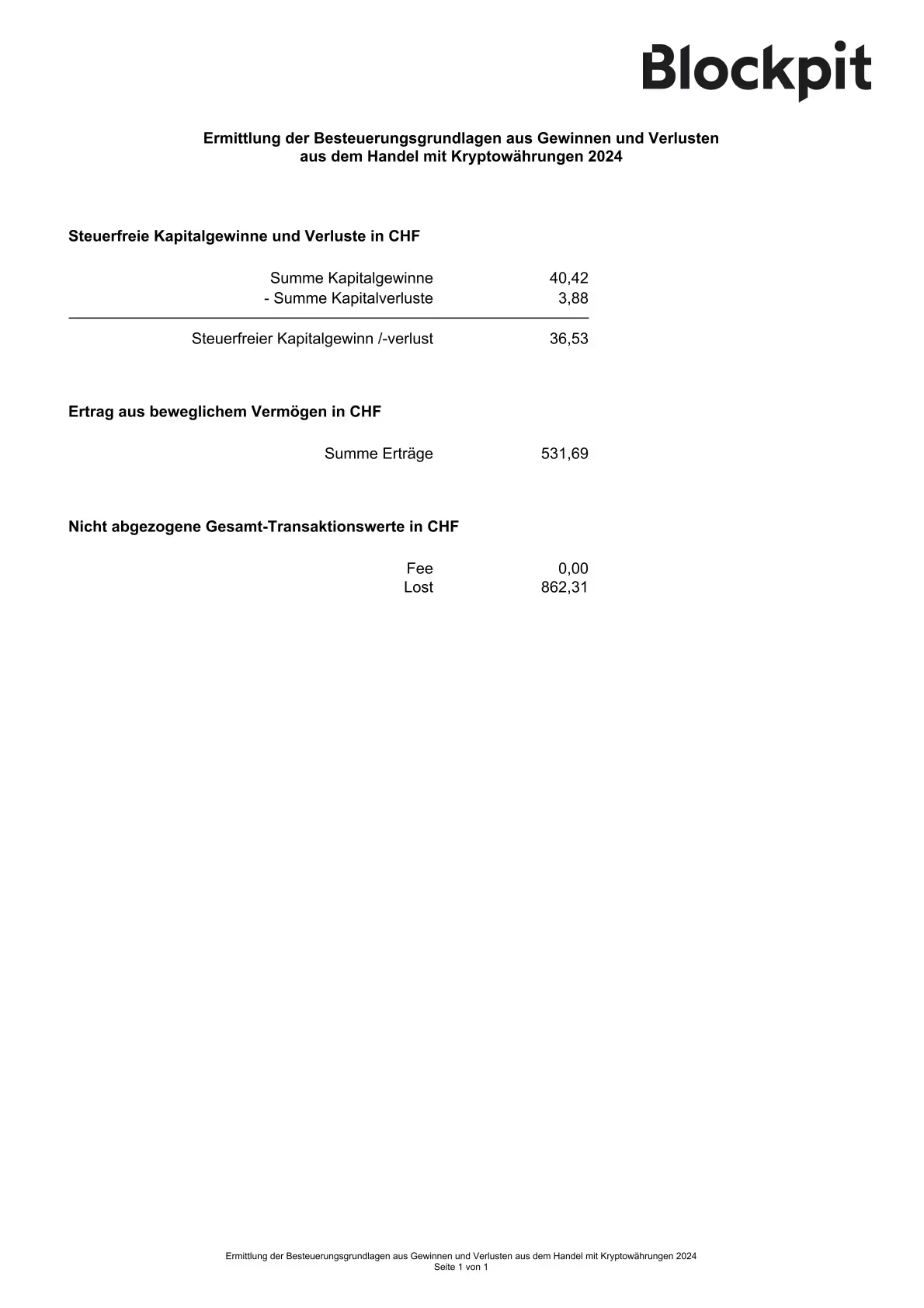
Crypto Tax Report Overview
You will receive a comprehensive overview of your tax-free capital gains and losses, income from movable property, and the total value of non-deducted transactions.
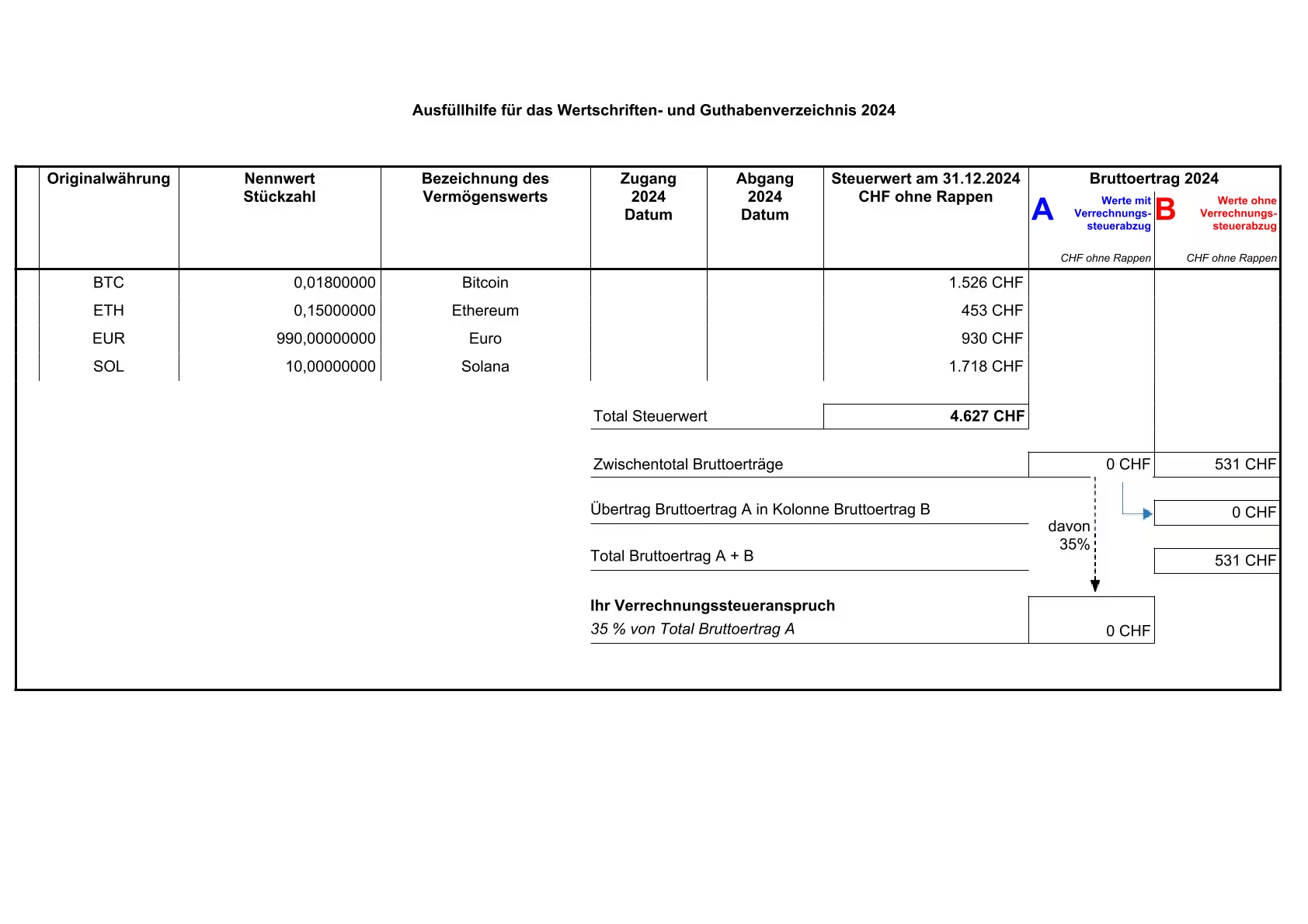
Filling Instructions for the “Wertschriften- und Guthabenverzeichnis”
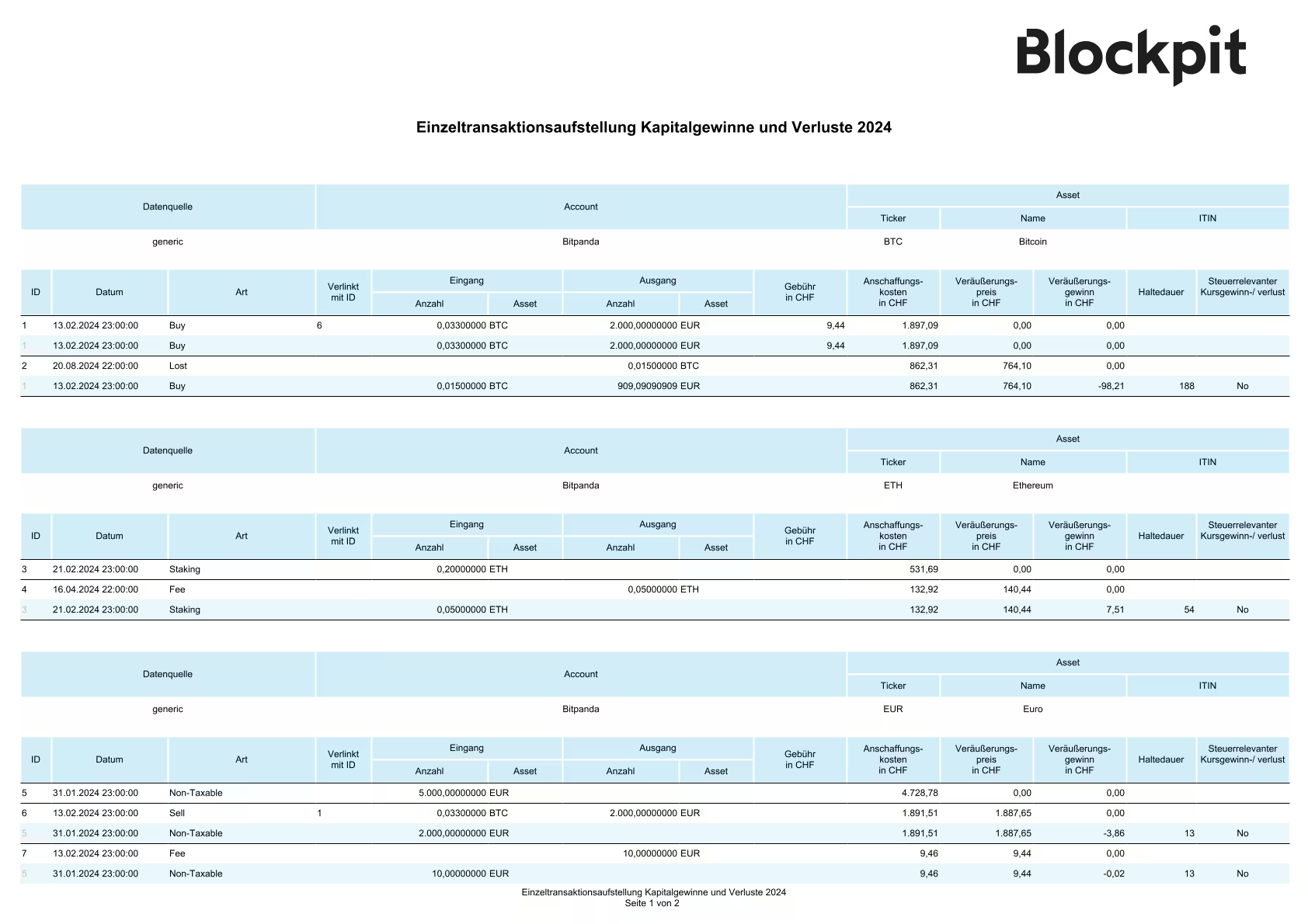
Single Transaction Overview
With a detailed list of all your transactions, you’ll have a complete history of your crypto year at your fingertips—perfect for a manual review and as documentation if there are any inquiries.
When Are There No Crypto Taxes?

Purchasing Cryptocurrencies with Fiat (CHF, EUR, USD)
Purchasing cryptocurrencies with fiat currencies is not taxable. Whether via bank account or credit card, it’s important to document the purchase for the cost basis. Blockpit does this automatically for you.
Purchasing Cryptocurrencies with Crypto
For private investors, exchanging one cryptocurrency for another is not subject to tax.
For professional (commercial) traders, however, realized or reinvested gains are taxed as income. In this case, the exchange is treated as a barter transaction, where the first transaction triggers a taxable gain or loss.
Transfers Between Two Wallets
Transferring cryptocurrencies between your own wallets is tax-free. To ensure tax reports do not mistakenly treat this as a sale, you should label these internal transfers in Blockpit.
Gifting Crypto
Gifts of crypto assets are subject to cantonal tax regulations, with rates ranging from 2% to 36%. However, there are exceptions, allowances, or reduced rates, particularly for gifts between close family members.
Donating Crypto to Charities
Cryptocurrency donations to tax-exempt charitable organizations in Switzerland are tax-deductible, based on the market value at the time of donation. Always check potential tax obligations when making crypto donations.
Fraud, Theft, and Losses
Losses from fraud or theft only affect the wealth tax. The loss reduces the taxable crypto portfolio if proven. Consult a tax expert for complex cases.
HODLing
Holding cryptocurrencies is tax-free but relevant for the wealth tax. If the total portfolio value exceeds the exemption limit on December 31, wealth tax becomes due, regardless of the holding period.
Taxation of Standard Transactions
<div class="card_body_small infobox margin-bottom_medium margin-top_small"><div class="flex_horizontal-copy gap-xxsmall margin-bottom_xxsmall"><div class="icon_small is-infobox w-embed"><svg xmlns="http://www.w3.org/2000/svg" width="24" height="24" viewBox="0 0 24 24" fill="none">
<path fill-rule="evenodd" clip-rule="evenodd" d="M2.25 12C2.25 6.61522 6.61522 2.25 12 2.25C17.3848 2.25 21.75 6.61522 21.75 12C21.75 17.3848 17.3848 21.75 12 21.75C6.61522 21.75 2.25 17.3848 2.25 12ZM10.9562 10.5584C12.1025 9.98533 13.3931 11.0206 13.0823 12.2639L12.3733 15.0999L12.4148 15.0792C12.7852 14.894 13.2357 15.0441 13.421 15.4146C13.6062 15.7851 13.4561 16.2356 13.0856 16.4208L13.0441 16.4416C11.8979 17.0147 10.6072 15.9794 10.9181 14.7361L11.6271 11.9001L11.5856 11.9208C11.2151 12.1061 10.7646 11.9559 10.5793 11.5854C10.3941 11.2149 10.5443 10.7644 10.9148 10.5792L10.9562 10.5584ZM12 9C12.4142 9 12.75 8.66421 12.75 8.25C12.75 7.83579 12.4142 7.5 12 7.5C11.5858 7.5 11.25 7.83579 11.25 8.25C11.25 8.66421 11.5858 9 12 9Z" fill="#1A73E8"></path>
</svg></div><div class="label"><span class="text_bold text-color-blue">Private Investor vs. Professional Trader in Switzerland</span></div></div><div class="label">In Switzerland, the sale of cryptocurrencies is tax-free as long as the Federal Tax Administration (ESTV) considers you a private investor. However, professional traders must pay capital gains tax when selling, exchanging, or using cryptocurrencies or stablecoins to purchase NFTs, goods, or services. All gains and losses from these transactions must be declared in the annual tax return.</div></div>
Airdrops
Cryptocurrencies received through airdrops are subject to income tax and considered taxable asset income. The market value at receipt or disposal is key. If no market value is available, a value of zero can be applied.
Hard Forks
While the ESTV provides no specific guidance on hard forks, they are likely treated like airdrops and subject to income tax. The market value of the new cryptocurrency at receipt is what counts.
Mining
Mining income is considered taxable asset income and subject to income tax. Coins are valued at market price in CHF upon receipt and disposal. Some cantons, such as Zug, Basel-Stadt, and Schwyz, set thresholds for when mining is considered business income.
- Zug: Mining is classified as a business if annual earnings exceed 100,000 CHF.
- Basel-Stadt: Mining is considered self-employment if annual earnings exceed 50,000 CHF.
- Schwyz: Mining is classified as a business if annual earnings exceed 50,000 CHF.
It's advisable to consult the relevant cantonal tax authority for up-to-date rules.
Crypto Trading: Futures vs. Margin Trading
Gains from futures and margin trading are treated as taxable asset income. Losses cannot be claimed unless you are trading professionally.
Crypto Payments as Salary
Cryptocurrency received as salary or compensation must be declared as taxable earned income. It should be recorded at its market value in CHF when received on your tax return.
Fees
In Switzerland, administration costs related to cryptocurrencies can be deducted from taxes. Some cantons offer flat-rate deductions, while others require actual proof. Always keep receipts to deduct the correct amounts. It is recommended to review the specific rules of each canton.
Taxation of DeFi Transactions
Staking
Rewards from staking cryptocurrencies are treated as asset income and are subject to income tax. The taxation depends on the taxpayer’s residency and the nature of the staking activities. It is also essential to determine whether you are classified as a private investor or a self-employed trader. It is important to check the specific tax regulations in your canton.
Lending
Interest from crypto lending is considered taxable income and subject to income tax. Taxation is based on the market value of the cryptocurrency at the time of receiving the interest. These earnings must be reported in your tax return to be properly taxed.
Taxation of NFTs
The ESTV has not yet issued specific guidelines on taxing NFTs, but they are likely to be taxed similarly to other cryptocurrencies. NFTs are considered assets and are only subject to wealth tax for private investors. Professional traders and companies must declare gains or losses from NFT sales.
Purchasing an NFT is tax-free, as it is acquiring an asset. If you are a professional trader or company buying an NFT with cryptocurrencies like ETH or SOL, it may trigger a taxable gain or loss. This is similar to exchanging cryptocurrencies.
Frequently Asked Questions
Are crypto capital gains tax-free in Switzerland?
Yes, for private investors. Gains from selling cryptocurrency are generally tax-free, while losses are not deductible. Professional trading activity can be taxed differently.
How is crypto declared on a Swiss tax return?
Crypto holdings are generally declared as assets on the cantonal tax return at their market value on 31 December. The ESTV publishes year-end values for major cryptocurrencies.
Are staking and mining rewards taxable in Switzerland?
Yes. Staking, mining, lending and similar rewards are generally taxable income valued when received. The resulting holdings are also included in the annual wealth-tax calculation.
When is crypto trading considered professional in Switzerland?
Classification depends on factors such as trading frequency, holding periods, leverage, financing and the importance of trading income. Professional activity can make gains taxable and losses deductible.
When is the Swiss crypto tax return due?
The filing deadline is usually 31 March following the tax year, but rules and extension procedures vary by canton. The applicable cantonal deadline should be checked before filing.