
In Belgium, most private crypto investors pay no capital gains tax — as long as they manage their wealth as a normal ("bon père de famille") investor. However, professional traders and frequent speculators are taxed as miscellaneous income at up to 33%. A proposed 10% solidarity tax on financial assets (including crypto) is pending legislative approval for 2026. This guide explains where the line is drawn under SPF Finances rules.
In January 2025, Belgium's new federal government proposed a 10% capital gains tax on financial assets, including cryptocurrencies. This "solidarity contribution" is slated to take effect in 2026, pending legislative approval. Notably, the first 10,000€ of annual gains would be exempt, with progressive rates for substantial holdings. As these measures are not yet finalized, we will keep you updated on any developments.
The popularity of cryptocurrencies and crypto investments continues to grow in Belgium. While neighbouring countries have set forth clear guidelines about the taxation of cryptocurrencies and other crypto assets, Belgium’s crypto tax laws are often seen as complex and difficult to navigate.
It is important to understand the tax implications of buying and selling crypto, and to ensure that you are properly reporting your crypto-related gains and losses to the SPF – Service Public Fédéral Finances, or the Belgian General Administration of Taxes.
Do you have to pay a crypto tax in Belgium?
Yes. Individuals and businesses in Belgium are required to pay crypto taxes on their cryptocurrency transactions. This includes the purchasing and selling of crypto assets with/for fiat money as well as other transactions, like swapping one cryptocurrency for another, mining cryptocurrency or receiving crypto as a gift.
There seems to be a general lack of official guidance from the SPF regarding more advanced crypto transactions like staking, mining, airdrops or even forks. Discover what this means for you further down in our tax guide.
How is crypto taxed in Belgium?
There are no specific crypto tax laws in Belgium. The Advance Decisions Service (SDA) published a note which specifies that: “Investments in cryptocurrencies are generally speculative in nature and the resulting income must therefore be treated as miscellaneous income”.
We can assume that crypto taxes in Belgium are similar to those for other assets without specific legal rules.
Therefore, gains from crypto-related transactions could be
- taxed as miscellaneous income for risky or speculative behavior with a capital gains tax of 33% + communal tax
- taxed as regular income from professional activities with a progressive income tax between 25-50% + communal tax + social security
- tax-free under the “Bon père de familie” condition, requiring prudent investment behavior on the management of private assets
There are a number of different facts and personal circumstances that may influence how crypto tax is applied in Belgium. Taxpayers in Belgium may request a binding tax ruling for an official guidance on their individual situation. Previous tax rulings are publicly available on the official website of the Belgian tax authority.
There is a lot of speculation about the deciding factors of a crypto tax ruling.
An analysis of the official rulings shows commonalities between the cases where a tax-exemption was denied:
- investing more than 25% of movable assets
- active trading
- corporate investments
- mining
We have provided more details about the different types of investors and the official self-assessment questionnaire in the next sections.
Capital gains tax
Capital gains tax is the most common form of crypto taxation in Belgium.
It is used to tax any capital gains or profits generated from cryptocurrency transactions including the sale of cryptocurrency for fiat (exchanging Bitcoin for Euro, for example) or the exchange of cryptocurrency for another cryptocurrency (exchanging Bitcoin for Ether, for example).
The capital gains tax rate on speculative income such as crypto is a flat rate of 33%.
The capital gains tax formula is very straightforward:
((Value of the cryptocurrency at time of sale – any fees or commissions related to the sale) – Value of the cryptocurrency at time of purchase) * 33%
A simpler example:
- You bought one Bitcoin for 10.000€.
- The value of the Bitcoin appreciates and you sell it at a later date for 15.000€.
- Your broker or crypto exchange charges you a 5€ fee for the transaction.
The formula now looks like this:
((15.000€ – 5€) – 10.000€) * 33% = 4.995€ * 33% = 1.648,35€
In this case, the capital gains tax would only apply to your profit of 4.995€, resulting in a tax payment of 1.648,35€.
Let’s say you sold your crypto for a lower amount than when you bought it. This means that you have incurred a loss. You will not pay capital gains tax on a loss. However, you might be able to use this crypto loss to offset your gains from other crypto transactions.
Income Tax
In some cases, gains from crypto transactions may be considered as professional income. This could be income from professional crypto mining activities, Initial Coin Offerings (ICOs) or airdrops, besides others.
Professional income is subject to a progressive tax scale:
- 0€ to 13.540€ = 25%
- 13.541€ to 23.900€ = 40%
- 23.901€ to 41.360€ = 45%
- 41.361 and up = 50%
There appears to be some confusion about progressive tax brackets, so let’s look at an example:
You have earned 25.000€ as a result of Bitcoin mining. You do not pay 45% income tax on the whole 25.000€ . Instead, that amount will be split up into the corresponding tax brackets and taxed accordingly.
- The first 13.540€ are taxed at 25%.
- The next 10.359€ (23.900€ – 13.541€) are taxed at 40%.
- The remaining 1.099€ are taxed 45%.
This results in a total tax obligation of 8.023,15€.
Here’s the formula:
(13.540€ * 25%) + (10.359€ * 40%) + (1.099€ + 45%) = 8.023,15€
Every taxpayer in Belgium is entitled to a “tax-free allowance”, meaning that income below that amount will not be taxed. The tax-free allowance for the income year 2024 is 10.570€ and for 2025 it is 10.910€.
Communal Tax
Individual municipalities in Belgium may levy an additional communal tax on top of the income tax. The communal tax rate ranges from 0% to 9%, the average being 7%.
Here is the complete list of communal tax rates in Belgium.
Gift tax
Gifted cryptocurrency or cryptocurrency received as a donation is subject to a gift tax in Belgium.
The gift tax is calculated like this:
Market value of the gift at the time of the donation – Cost of the gift at time of purchase
Crypto tax rates Belgium
The tax authorities in Belgium differentiate between three types of investors, to whom different tax rates apply.
Individual Investors
Capital gains for individual investors are generally tax-free in Belgium UNLESS they fall under specific types of capital gains – including gains from speculative activities, which covers most crypto investments.
As mentioned above, capital gains tax in Belgium is a flat tax of 33%.
There are, however, circumstances under which individuals do not have to pay capital gains tax on crypto in Belgium. More on that in the next section.
Professional Investors & Crypto Miners
If you generate your income from professional investment activities or crypto mining, it will be taxed at the progressive income tax rates from 25% to 50% as shown above.
Corporations
Crypto gains from corporate investment activities are taxed at the corporate income tax rate of 25%.
The three types of investors – how much crypto tax you need to pay in Belgium
For the purposes of this crypto tax guide, we will assume that you are acting as an individual investor and are not a corporation.
In that case, the Belgian tax authorities distinguish between three categories of individual investors. Let’s have a look!
Bon père de famille – The prudent investor
Gains from cryptocurrency transactions are tax free in Belgium if they are carried out without speculative insight and within the “normal management of private assets”.
What is normal and what is speculative is, of course, highly subjective and can differ from investor to investor.
As a rule of thumb, a “prudent investment” requires that only a reasonable amount of your total investment is allocated towards crypto assets and a long-term strategy is in place.
If the SPF determines you to be a prudent investor, you do not need to include your crypto transactions in your tax report.
The SPF – Service Public Fédéral Finance has provided a self-assessment questionnaire to help determine if you are a prudent investor. The questionnaire includes 17 questions about your investment activities. We’ve included the questions in the next section.
Spéculateur – The speculative investor
You might fall under the category of a speculative investor if you are taking risks with crypto investments, are investing only for a short period of time or if you are utilizing more advanced trading strategies.
If the SPF determines this to be the case, you will have to pay a flat capital gains rate of 33% + communal taxes on your crypto gains.
Professionnel – The professional investor
Crypto gains from professional investment activities qualify as professional income and are therefore subject to the progressive personal income tax rates between 25% and 50% + communal taxes.
Additionally, professional income may also trigger social security contributions.
Which investor are you?
So, what kind of investor are you? And who is to decide? The SPF, of course.
There is an official list of questions to determine which kind of crypto investor you are, if you need to pay crypto tax in Belgium – and if so, how much.
And we have included an english translation here for your convenience:
- How did you come into possession of cryptocurrencies (e.g. by inheritance by inheritance, donation, personal savings, replacement of movable or immovable assets …)?
- How many years have you been investing in cryptocurrencies?
- For what amount (total) have you already invested in cryptocurrencies?
- How often do you buy and sell? In other words, how many times a year do you make these types of transactions (once, daily, weekly, monthly, a few times a year) ? Please provide the details of all the operations carried out so far (purchases, sales, conversions of a cryptocurrency into another cryptocurrency, …) indicating the dates and amounts of the transactions.
- How long have the cryptocurrencies you wish to transfer/cease have been in your possession?
- What is your investment strategy in cryptocurrencies?
• “buy & hold”: hold the virtual currencies for a long time
• “trending”: trade/sell based on technical analysis of market prices or trends
• “active trading / daytrading / scalping”: the realization of small gains on very short open positions
• “arbitrage”: buying and selling on different exchanges in order to profit from price differences on these exchanges. - Do you mine via your own mining rig or a mining pool? If yes, please provide further explanation.
- Do you buy or sell cryptocurrencies through an automated process or automated software? Did you design this process/software yourself? Please provide details.
- What is your current professional activity? What education have you completed? Have you gained any knowledge of cryptocurrencies in the course of your professional activity?
- Have you invested in a cryptocurrency investment fund? Please provide any relevant details.
- Are you active in the cryptocurrency community on forums or via blogs? Do you give lectures on the subject? Please provide any relevant details.
- What percentage of your assets (movable) have you invested in cryptocurrencies? Do you also invest in other movable assets (e.g. stocks, bonds, paintings, gold, …)? If so, please specify in which other movable assets you have invested in as well as the proportion of your investment in cryptocurrencies compared to other investments.
- Do you use any special equipment to protect your cryptocurrencies (for example hardware wallet)? If yes,please provide details.
- Do you also invest in cryptocurrencies for others? If yes, please specify for whom and for what amount.
- Have you used borrowing to finance your cryptocurrency purchases? If yes, for what amount and from whom did you borrow?
- What is the (market) value of your cryptocurrency portfolio at the present time (including date)?
- Do you use the advice of professionals in the financial and/or IT sector in your investments in cryptocurrencies?
Taxation of Crypto Transactions
Do you pay taxes when buying cryptocurrencies with fiat?
No, there is no crypto tax in Belgium for buying crypto with fiat money like Euro.
Do you pay taxes when selling cryptocurrencies for fiat?
Selling cryptocurrency for fiat is a taxable transaction resulting in a capital gains tax if the sale realizes a gain.
Do you pay taxes when exchanging one cryptocurrency for another cryptocurrency?
Swapping one cryptocurrency for another cryptocurrency is a taxable transaction resulting in a capital gains tax if the exchange realizes a gain.
How is mining cryptocurrencies taxed?
Taxation of crypto mining in Belgium can be a bit more complicated.
Miners receive cryptocurrency as a reward for ensuring the integrity of the crypto network and verifying the transactions on the respective blockchain.
There is an ongoing discussion about the classification of the rewards generated by mining. Some argue that mining rewards should be qualified as self-produced assets, while others consider it as a form of payment for the services rendered to the network.
As there currently is no clear guidance, crypto miners should contact the SPF for an individual assessment.
How is staking taxed?
Staking serves a similar purpose to mining, in that it is a process to validate transaction blocks in a blockchain.
Neither the ruling commission nor the tax administration have taken a final position on the staking of cryptocurrency or similar DeFi transactions.
Some tax lawyers have appeared to compare staking rewards to movable income such as interest, which would be taxed at 30%.
Once again, as there is no clear guidance on the topic of staking cryptocurrency in Belgium, investors should contact the SPF for an individual assessment.
Any taxes for airdrops?
There is no clear guidance on the crypto taxation of airdrops in Belgium.
In an individual ruling from 03.05.2022, it was decided that the gains from all crypto transactions including free airdrops will be taxed as miscellaneous income: capital gains tax at 33%.
How are crypto losses taxed?
There is no crypto tax on losses in Belgium.
However, losses from crypto transactions can offset gains from crypto transactions. This is a common way to reduce the total tax liability in your crypto tax declaration.
How are crypto trading fees taxed?
Crypto trading fees are considered in the calculation of capital gains tax or income tax, where they are subtracted from the value of the cryptocurrency at the time of the sale.
Is there a value added tax VAT on crypto?
There is no official guidance on VAT treatment of crypto assets, other than the European court of Justice (ECJ) decision (Skatteverket v David Hedqvist Case C-264/14).
The court ruled that cryptocurrencies are a contractual means of payment and that transactions relating to such currencies constitute financial transactions.
No VAT tax on purchases or sales of crypto currencies in Belgium then.
Ways to optimize your cryptocurrency taxes in Belgium
Tax-loss harvesting
Tax loss harvesting in crypto is a tax strategy that involves selling crypto assets that have decreased in value in order to offset taxable gains on other crypto assets.
The basic idea is to sell the crypto asset at a loss and then use that loss to offset taxable gains on other crypto assets that you’ve sold during the year.
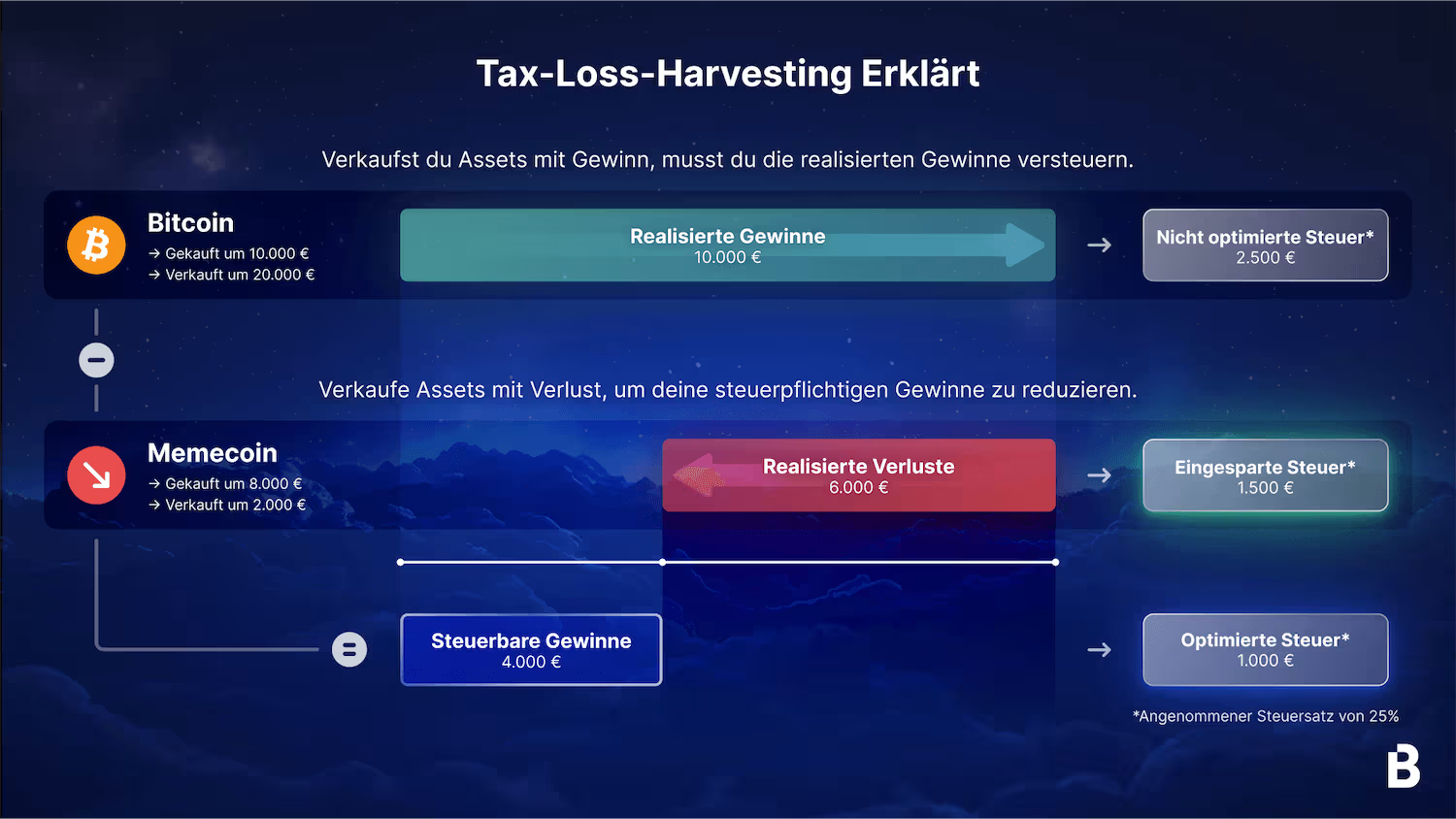
Access Blockpit’s Crypto Tax Optimizer for seamless Tax Loss Harvesting, with visual insights into unrealized gains, tax-free assets, and an innovative Sell Simulation feature - available exclusively at Blockpit.
HODLing
HODLing your cryptocurrencies, that is keeping them for a long period of time without selling or exchanging them, is tax-free. HODLing might also increase your chances to be considered a “prudent investor”, which would mean no taxes on any crypto gains!
Being a “prudent investor”
There are many things you can do (or refrain from doing) that will help you achieve “prudent investor” status with the SPF. Refer to the previous section “Which investor are you?” for inspiration.
What inventory methods can be used to calculate crypto gains and losses?
There are, once again, no specific guidelines regarding the inventory methods used to calculate gains and losses for the purpose of crypto tax in Belgium.
Taxpayers are free to decide which crypto inventory method is most suitable for their situation.
Here’s a quick overview of the three common methods:
FIFO – First In First Out
Under FIFO, it is assumed that the first cryptocurrency units purchased or acquired are the first ones sold or transferred. This means that the cost basis of the oldest units in a cryptocurrency wallet or portfolio is used to calculate the gains, losses, or value of the units sold or transferred.
The cost basis of the most recent units acquired is used to calculate the value of the remaining units in the portfolio.
LIFO – Last In First Out
The LIFO inventory method for cryptocurrencies assumes that the most recent units of cryptocurrency acquired or purchased are the first ones sold or transferred. This means that the cost basis of the most recent units in a cryptocurrency wallet or portfolio is used to calculate the gains, losses, or value of the units sold or transferred, while the cost basis of the oldest units is used to calculate the value of the remaining units in the portfolio.
The LIFO method is less commonly used than the FIFO method for cryptocurrencies because it can result in higher capital gains taxes in a rising market, but it may be useful for tax planning purposes.
HIFO – Highest In First Out
The HIFO inventory method for cryptocurrencies involves selling or transferring the units with the highest cost basis first. This means that the gains or losses realized from selling or transferring cryptocurrency are based on the units with the highest acquisition cost.
This method is often used to minimize capital gains taxes and maximize profits. However, tracking and implementing the HIFO method can be more complex and time-consuming than other methods, and it may not be suitable for all investors or traders.
AVCO – Average Cost
The AVCO inventory method for cryptocurrencies calculates the average cost of all units acquired or purchased and uses this average cost as the basis for determining the value of the units sold or transferred.
This means that the cost basis for each unit of cryptocurrency is the same, regardless of when it was acquired or purchased. The AVCO method is simple to use and can be an efficient way to calculate gains or losses on cryptocurrency transactions.
However, it may not be appropriate for all situations and may not provide an accurate representation of the actual cost basis for each unit of cryptocurrency.
Can the SPF track your cryptocurrencies?
Belgian tax authorities are increasingly vigilant about cryptocurrency holdings. The Special Tax Inspectorate (STI) has been actively seeking information on Belgian investors with crypto assets, including those held on foreign exchanges. Utilizing international agreements, they have obtained data from platforms like Coinbase. Consequently, several investors have received requests to provide detailed records of their crypto transactions spanning multiple years.
Looking ahead, the European Union's DAC8 directive mandates that, starting January 1, 2026, crypto-asset service providers must report customer transactions to EU tax authorities. This initiative aims to enhance tax transparency and compliance across member states.
Given these developments, it's imperative to maintain meticulous records of all cryptocurrency transactions. Utilizing a reliable crypto portfolio tracker, such as Blockpit, can assist in accurate tracking and reporting, ensuring adherence to evolving tax regulations.
Tips on preparing for the crypto tax period in Belgium
Keep records
You are responsible for maintaining the necessary records related to your crypto investment. That includes:
- Transactions including Dates
- Type of crypto asset
- Acquisition source
- Wallet addresses
- Cost bases
- Mining logs
- Bank statements
- Annual statements
Blockpit’s crypto portfolio tracker integrates with crypto exchanges, wallets and blockchains to automate the process for you and keep precise records of everything you need. Sign up for free!
Use crypto tax software to calculate your gains and losses
We realize how much work, pain and frustration can go into your crypto tax declaration, which is why we developed Blockpit’s crypto tax calculator.
Our crypto tax solution automatically imports all relevant data from exchanges, wallets and various blockchains and exports your personal tax report using the Belgian tax-framework.
All you have to do is enter the values from your Blockpit tax report into your yearly tax declaration. That’s it. No more headaches. Try it now!
Accountants love us, too! You can save on time and fees by sharing your Blockpit crypto tax report with your accountant. They’ll thank you for it.
Crypto Tax Deadlines in Belgium
In Belgium, the deadlines for filing income tax returns, which include declarations of cryptocurrency transactions, vary based on the method of submission and whether assistance from an accountant is utilized.
Tax Deadlines if you submit your tax return yourself
- Paper format: Typically due by June 30.
- Tax-on-web: Usually due by July 15.
Tax deadlines if you instruct an accountant to fill in your tax return
- MyMinfin (Tax-on-web): Generally extended to October 28.
How to report crypto taxes with the SPF?
To report your crypto taxes, you must file an annual tax return with the Federal Public Service Finance (SPF). This can be done online via the Tax-on-web platform, which requires a Belgian electronic ID card or Itsme, or through a paper submission. It's essential to maintain detailed records of all cryptocurrency transactions, including dates, amounts, and associated costs, to ensure accurate reporting and compliance with Belgian tax regulations.
Blockpit: Use crypto tax software for easy tax reporting
If you’ve ever filed a tax return, you know how many hours can go into research, documentation, and preparation.
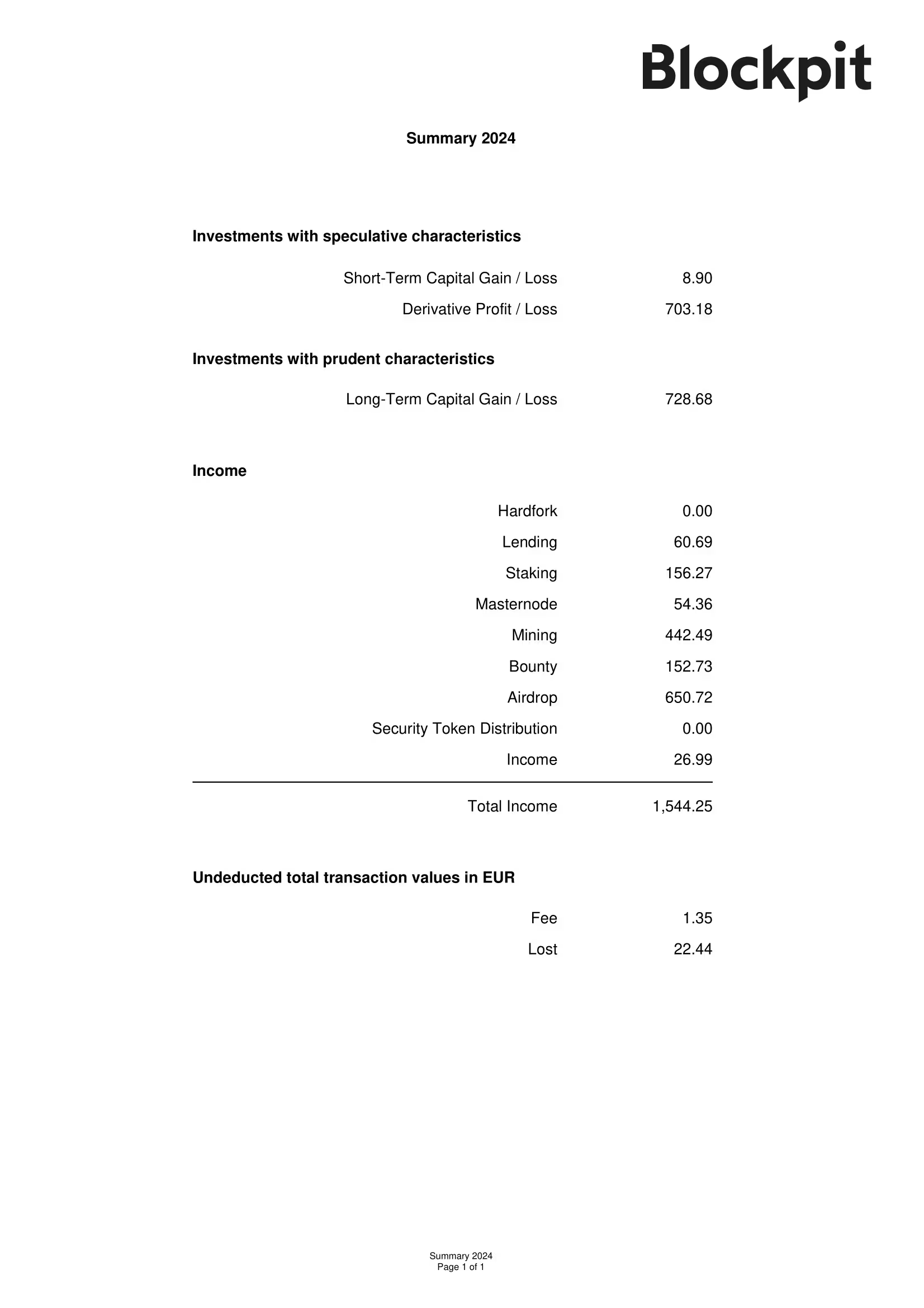
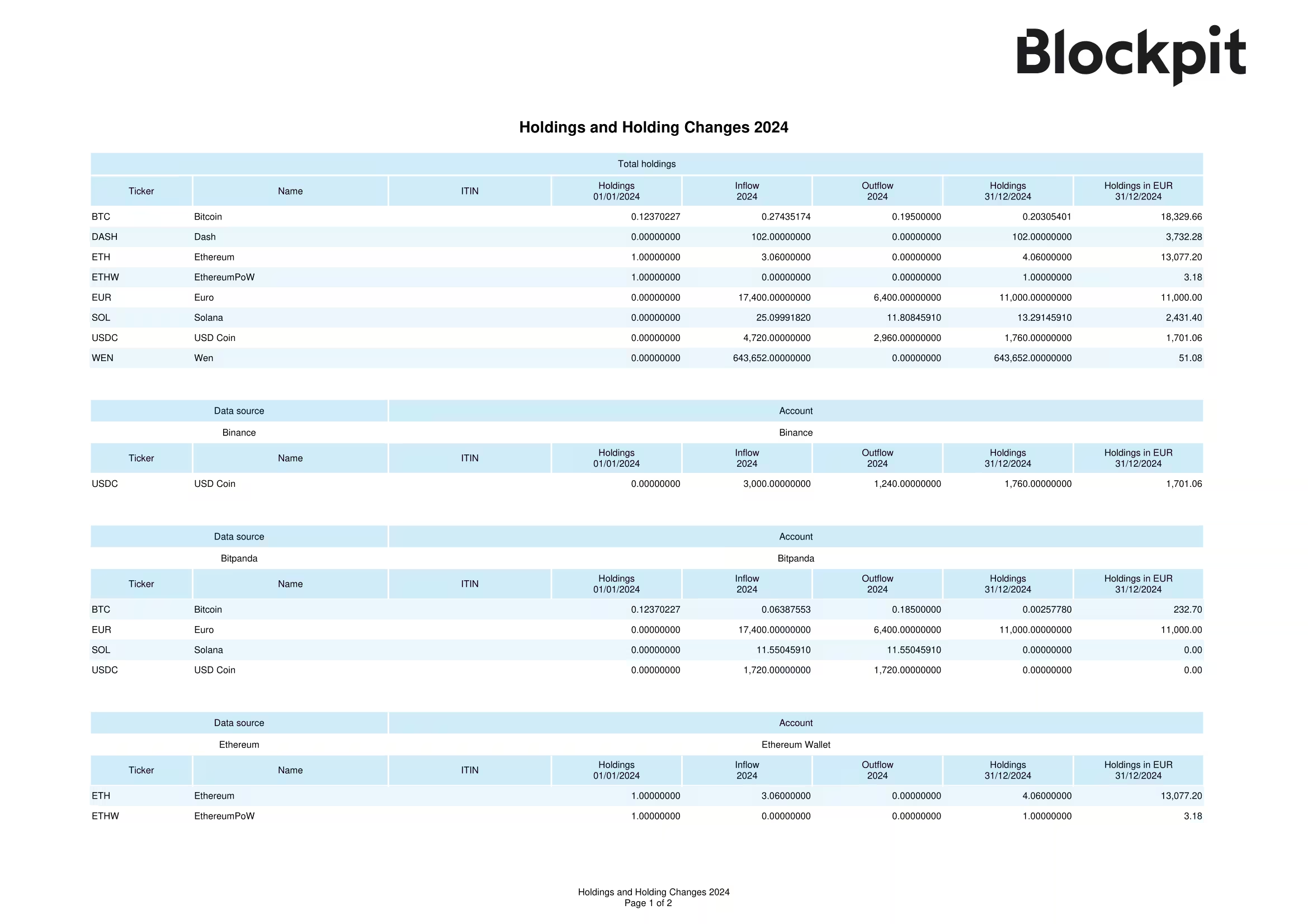
With Blockpit’s legally compliant tax reports designed for the Belgian tax framework you’ll receive a comprehensive overview of all crypto transactions.
Our tax engine automatically calculates your capital gains and losses as well as the tax-relevant amount from income transactions. Based on our comprehensive tax report you can easily fill in the right amounts in your tax return.
Your Blockpit tax report also includes detailed statements about your total holdings, as well as chronological overviews of each individual transaction.
Frequently Asked Questions
Is crypto taxed in Belgium?
For most private investors, no capital gains tax applies to crypto — gains from managing your own wealth are tax-free under the "bon père de famille" principle. However, professional traders and those who trade speculatively are taxed on crypto income at up to 33% as miscellaneous income (revenus divers).
What is the proposed 10% solidarity contribution on crypto?
Belgium's federal government proposed in early 2025 a 10% capital gains tax on financial assets including crypto, with the first €10,000 in annual gains exempt. This measure is pending legislative approval and, if passed, would take effect in 2026. We're tracking this development and will update this guide accordingly.
Do I need to declare crypto on my Belgian tax return?
You must report crypto income that qualifies as taxable (professional or speculative trading gains) on your annual tax return filed with SPF Finances. Even tax-exempt gains should be tracked in case the tax authority questions the nature of your activity.
How are professional crypto traders taxed in Belgium?
Crypto activity classified as professional is generally taxed as professional income at progressive Belgian income tax rates. Speculative activity that is not professional may instead be taxed as miscellaneous income at 33%.
When must crypto be reported to SPF Finances?
Taxable crypto income and gains are reported with the annual Belgian income tax return. Filing deadlines vary by year and filing method, so the applicable SPF Finances deadline should be checked before submission.