
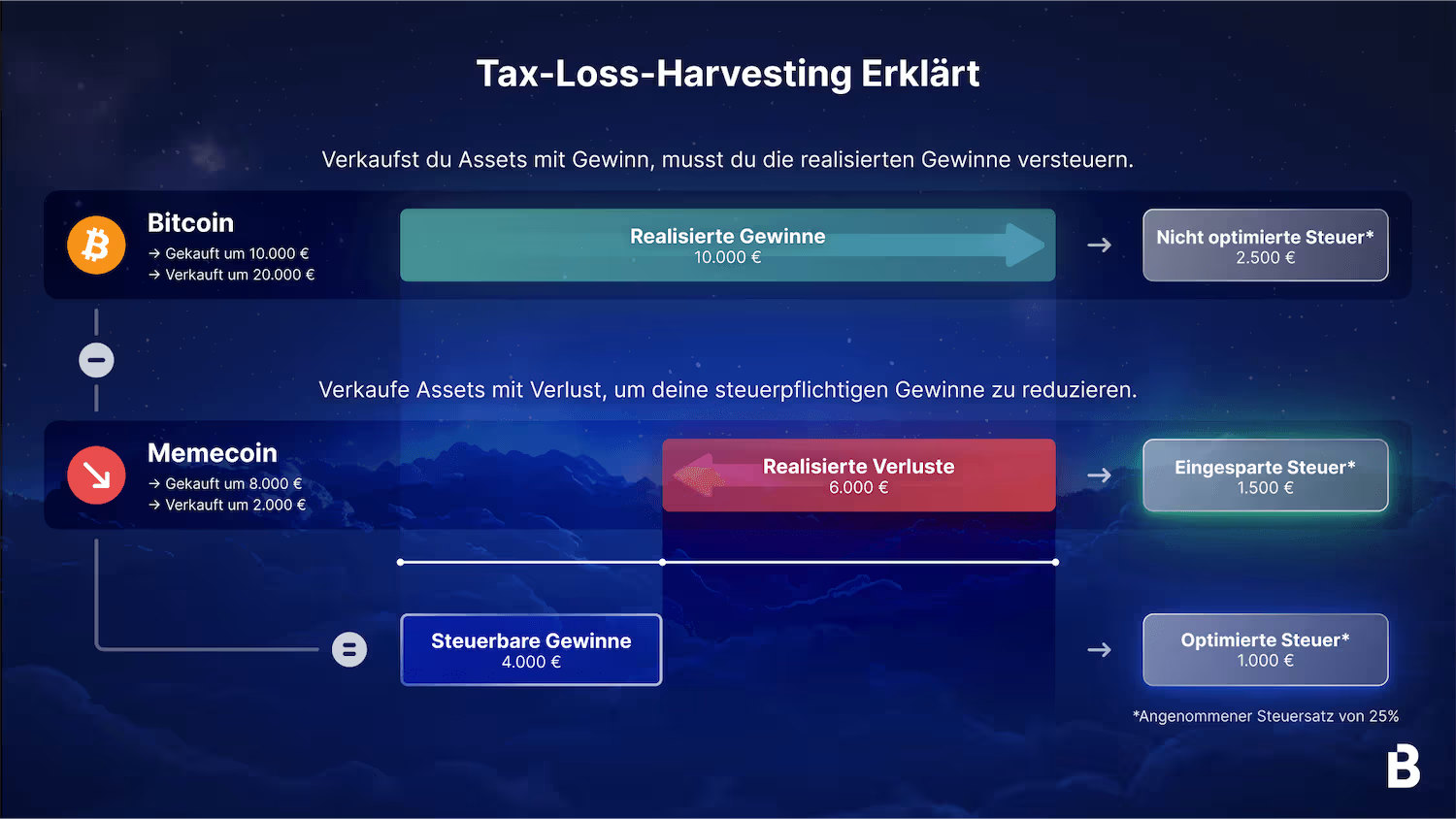
Tax loss harvesting means intentionally selling underperforming crypto assets at a loss to offset taxable gains from other investments — reducing your overall capital gains tax bill. In many countries, including the US, crypto isn't currently subject to the same wash sale rules that apply to stocks, making this strategy especially powerful.
This guide covers how it works, when to use it across different countries, and how Blockpit can help you spot the right opportunities.
Is Tax Loss Harvesting Allowed for Crypto?
Most countries, including the US, the UK, and most of the EU, treat crypto as property or an asset subject to capital gains tax — so the same principles that apply to stock and asset transactions extend to digital assets.
We’ve prepared specific tax loss harvesting guides to dive into the details of each country:
Crypto Tax Loss Harvesting Germany
Crypto Tax Loss Harvesting Austria
What types of gains can be offset by crypto losses?
Crypto losses are capital losses, and can typically offset:
- Gains from other cryptocurrencies: A 2,000€ loss on Bitcoin can cancel out a 2,000€ gain on Ethereum.
- Gains from stocks and equities: In many countries, a crypto loss can offset a stock gain of the same amount, eliminating the taxable gain.
- Short-term vs. long-term gains: Where countries distinguish between the two, losses generally only offset gains of the same category.
- Ordinary income (in some countries): In the US, once capital gains are fully offset, up to $3,000 of remaining losses can reduce ordinary income like wages, with any excess carried forward.
Rules vary widely by country. Check the Crypto Tax Guide for your country and use a Crypto Tax Calculator to apply your local rules correctly.
How Much Can You Harvest — and Carry Forward?
Most countries let you offset an unlimited amount of capital gains within the same year. Limits typically only apply to offsetting ordinary income — in the US, that's $3,000 annually.
Unused losses beyond that don't disappear:
- US: Carried forward indefinitely.
- UK: Carried forward indefinitely, but must be reported in the year they occur.
- Germany & France: Carried forward to offset future gains from similar asset classes; France caps this at 5 years.
When Is the Best Time for Tax Loss Harvesting?
- Year-end: You have the clearest picture of gains, losses, and overall liability — ideal for fine-tuning before filing.
- Market downturns: Volatility creates opportunities to realize losses; you can repurchase afterward if you expect a rebound (watch for wash sale rules where they apply).
- Ahead of regulatory changes: If your country is considering new rules (e.g., a wash sale rule for crypto), harvesting losses beforehand locks in the current benefit.
- During portfolio rebalancing: A natural moment to realize losses on underperforming assets while adjusting your strategy.
- After a permanent loss: Rug pulls, failed projects, or worthless meme coins — realizing the loss extracts at least some value from a bad investment.
Wash Sale Rules
A wash sale rule blocks you from claiming a loss if you sell an asset and buy it back within a set window. It typically applies to stocks, and a few countries have extended similar logic to crypto:
- UK: The 30-day "bed and breakfasting" rule — sell at a loss and rebuy the same asset within 30 days, and the loss is disallowed.
- Australia & Canada: Similar rules apply.
- US, Germany, France, and most other EU countries: No wash sale rule for crypto — you can sell at a loss and immediately repurchase. In Germany and Austria, however, rapid repurchases with no real economic substance can still draw scrutiny.
Other Things to Keep in Mind
Track everything. Dates, purchase prices, sale prices, and fees for every trade — tax authorities may request a full transaction overview before accepting your filing. Blockpit compiles this automatically and factors in trading fees to reflect your true gains and losses.
Know what counts as taxable. Crypto-to-crypto trades and certain wallet transfers may not be taxable events in your jurisdiction. Blockpit supports the specific tax rules of 100+ countries, including the US, UK, Germany, France, Spain, Italy, Austria, Switzerland, the Netherlands, and Belgium.
Crypto Tax Loss Harvesting with Blockpit Plus
Manually scanning your portfolio for loss-harvesting opportunities takes hours — and it's easy to miss something. Blockpit Plus's tax optimizer scans your portfolio for you, highlighting underperforming assets and potential tax-saving opportunities before you act. On average, users identify €2,395 in tax savings.
Frequently Asked Questions
What is crypto tax loss harvesting?
Selling cryptocurrency at a loss to offset capital gains from other investments, reducing your taxable income. It's most effective when used strategically before the end of the tax year — especially since losses can't be carried forward in every jurisdiction (e.g., Austria).
Is there a wash sale rule for crypto?
In the US, crypto is currently not subject to the wash sale rule — you can sell at a loss and immediately repurchase the same asset, though this may change with future IRS guidance. The UK's 30-day Bed & Breakfast rule applies. In Germany and Austria, rapid repurchases can be scrutinized for economic substance.
When is the best time to use tax loss harvesting?
Before the end of the tax year — unrealized losses must be turned into realized losses by December 31 (or your local year-end deadline) to count. During market downturns, it can offset gains from profitable positions and free up capital for reallocation.
Which gains can crypto losses offset?
The answer depends on local tax law. Crypto capital losses commonly offset eligible capital gains, while some jurisdictions restrict offsets by asset class or income category. The country-specific rules must be applied.
Can unused crypto losses be carried forward?
Many jurisdictions allow eligible unused losses to be carried forward, but the period and conditions vary. Austria and other countries may apply different restrictions, so records should be retained for each tax year.